
Bedrock Miner
AleksandrFomanArcade
3.135.00 Reviews
- Version
- 1.0.9.2
- Installs
- 10.00K
- Age Rating
- Everyone
Screenshots
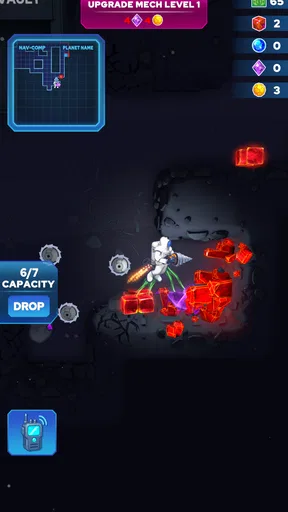
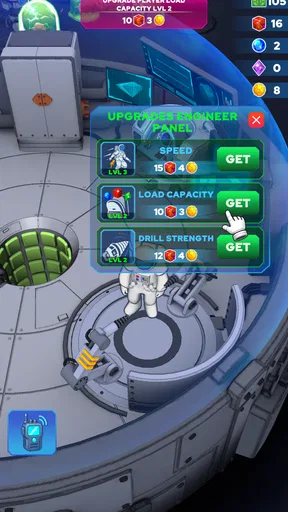
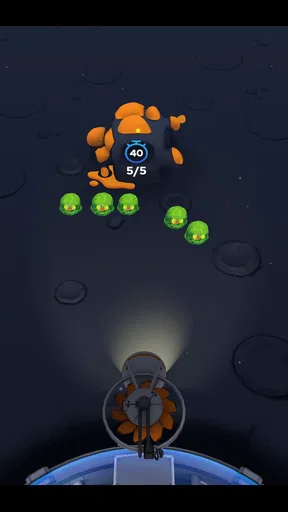
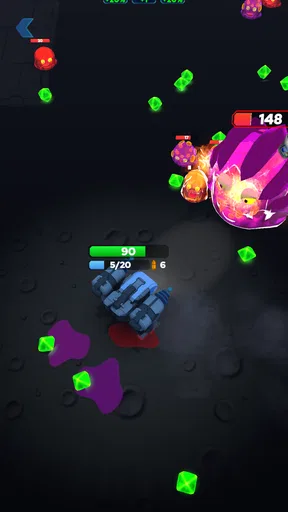
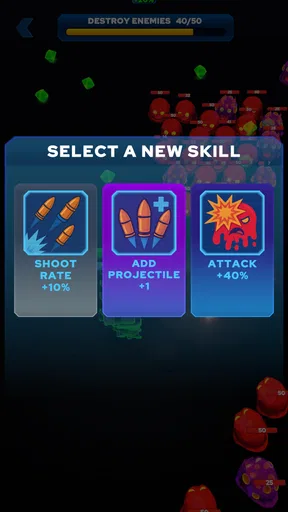

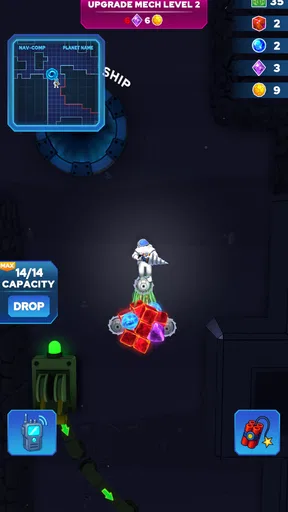
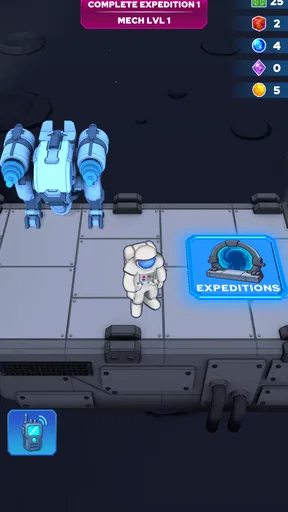
Our Review of Bedrock Miner
 Analysis by Appyee
I found Bedrock Miner most appealing as a small, low-pressure arcade game for a shared phone or tablet. Its basic idea is easy to understand: mine, improve your engineer, and keep uncovering what lies below. I could start playing without learning a complicated control scheme, which makes it suitable for short breaks, passing a device around, or relaxing at the end of the day.
That simplicity is also the main thing to understand before downloading it. This is not an expansive adventure with a large story or a competitive multiplayer focus. It is a compact mining experience built around gradual progress. I enjoyed the quiet rhythm, but players who need constant action, deep strategy, or a strong narrative may find it too modest.
How Bedrock Miner works in everyday shared use
On a household device, the game fits naturally into short sessions. One person can make a little progress, hand over the phone, and let someone else continue exploring. The premise is readable enough that a younger player can understand the goal quickly, while an older player can still enjoy deciding when an upgrade is worthwhile.
I would use it in a situation where a family is waiting for food, traveling, or sharing a tablet during a quiet evening. It does not demand a long uninterrupted commitment from the player. That makes it easier to include in a shared routine than an arcade game that depends on precise timing every few seconds.
There is a useful distinction between sharing a device and sharing progress. Bedrock Miner can be passed from one person to another, but I would not assume that each household member gets a separate personal space automatically. If several people want independent progress, I would agree on a simple turn-taking system before starting rather than expecting the game to separate everyone’s work for them.
That small conversation matters more than it may seem. A child might want to spend every available resource on immediate improvements, while an adult may prefer saving for a larger change. Because the appeal comes from gradual development, overwriting or mixing progress could quickly become frustrating if everyone treats the same run differently.
A calm arcade loop rather than a full management game
The mining loop gives the game its identity. I liked that the activity feels more relaxed than a conventional score-chasing arcade title. Instead of relying only on reflexes, the experience encourages me to think about improvement and discovery. The promise of finding more beneath the surface gives ordinary progress a little curiosity.
Still, the loop is intentionally narrow. If you usually play arcade games for rapid rounds, leaderboards, or increasingly demanding challenges, this may feel slow. Its satisfaction comes from returning to a developing engineer and seeing the next step become possible, not from mastering a difficult sequence in a single attempt.
That difference helps explain the average reception of around 3.1 from roughly 141 ratings. I would not read that figure as proof that the game is poor, but it does suggest that its restrained style will not suit everyone. The game works best when “relaxing” is genuinely what you want, rather than when you are hoping for a deep mining simulator.
Setting up a shared device without confusion
The practical setup is straightforward for compatible Android users. The game is free to start, is marked for Everyone, and runs on Android 7.0 or later. That broad age label makes it easier to consider for a household device, although an age rating should not replace a parent’s judgment about whether the progression and spending model fit a particular child.
I would install it first on the device that will actually be used, then open it privately before handing it to anyone else. That gives me a chance to understand the opening flow, check how progress behaves, and decide whether the game feels comfortable for the intended player. A short test is especially useful when several people share one screen.
The developer is AleksandrFoman, and the current version is 1.0.9.2. Keeping the app updated is sensible, but I would still avoid promising a child that a particular behavior or progression detail will remain unchanged after an update. For a shared device, the safest habit is to check the game after updating before making it part of a regular routine.
I also recommend deciding who is allowed to make purchases before play begins. The game is free, but its in-app items range from $0.99 to $99.99 each. That is a meaningful difference between trying the game at no cost and allowing spending. A child who sees an upgrade opportunity may not understand that tapping through it can involve real money.
For that reason, I would treat the free entry point and the purchase system as two separate decisions. You can try the mining loop without committing to a purchase, but a shared device should not have an open-ended spending arrangement. The most useful boundary is a clear household rule: play is allowed, while purchases require an adult’s direct approval.
Coordination makes the progression more enjoyable
Bedrock Miner becomes easier to share when players agree on what they are trying to accomplish. One person might focus on improving the engineer, while another may care more about uncovering secrets. Those priorities can coexist, but they can also pull the same progress in different directions.
I would suggest a simple handover routine. Before passing the device, the current player can say what they upgraded, what they are saving for, and what they want the next player to avoid changing. This takes only a few seconds, yet it prevents the common shared-device problem where someone returns to find that the plan has been completely altered.
A small written note can help if the game is used by several people over multiple days. It could record the household’s agreed goal in plain language, such as saving resources for the next engineer improvement rather than spending them immediately. This is not a feature of the app; it is a practical way to protect a shared run from misunderstandings.
The game is also a reasonable choice for a child and adult to play side by side, with the adult asking why a particular improvement seems useful. That turns the upgrade loop into a gentle decision-making exercise without making the game feel like homework. I would keep the conversation light, though. The appeal disappears if every tap becomes a lesson or a negotiation.
For siblings or friends using one tablet, turn length is worth agreeing on in advance. Short, equal turns are fairer than letting the most enthusiastic player keep the device indefinitely. Because the experience is based on gradual progress rather than a clearly defined match, a timer or a fixed number of turns can create structure that the game itself may not provide.
What the age label does and does not settle
The Everyone rating is reassuring for general suitability, but I would not use it as a complete trust decision. The important household question is not only whether the content is appropriate; it is also whether the player understands upgrades, shared progress, and optional spending.
For a younger child, I would introduce the game with an adult nearby. The first session is a good time to explain that mining progress belongs to the shared run, that upgrades change future choices, and that no purchase should be made without permission. These are simple boundaries, but they prevent most of the tension that can arise when a relaxing game becomes unexpectedly expensive or someone’s progress changes.
Older children and adults will probably need less supervision, yet the purchase range still deserves attention. A free game can be perfectly reasonable for a household as long as the spending boundary is explicit. I would be more comfortable recommending it on a family tablet with controlled purchasing habits than on a device that anyone can use without checking who is tapping the screen.
I would also avoid presenting the game as a private account-based experience unless I had personally confirmed how separate profiles work on the device. The safer assumption for coordination is that everyone should protect the same progress through communication. If personal progression is essential, a game designed around clearly separated profiles may be a better fit.
Where it stands beside other arcade choices
Compared with a traditional arcade game built around quick reactions, Bedrock Miner is slower and more reflective. It gives me a reason to return beyond chasing a single high score: I can improve the engineer and continue exploring. That makes it a better match for players who enjoy incremental goals than for someone looking for a burst of intense action.
Compared with a full mining or construction simulator, it is easier to approach but likely less demanding. I would choose it when I want the feeling of digging and upgrading without learning a large system. I would choose a deeper simulator instead when I want detailed resource chains, complex planning, or a world that asks me to manage many connected responsibilities.
It also differs from a competitive arcade title because the main appeal is personal progression. That is useful in a family setting: players can discuss discoveries without turning every session into a contest. On the other hand, anyone who needs rankings, direct competition, or a strong social layer may feel that the game lacks the pressure that makes arcade play exciting.
One of my more practical observations is that the game’s best use case is not necessarily a long evening session. Its relaxed loop is more convincing in small visits, when I want a gentle activity that can be paused and resumed. If I force myself to play for a long stretch, the limited central idea becomes more noticeable.
Three habits that improve the experience
First, I would save major upgrade decisions for a moment when the device is not being passed around. A quick tap made during a handover can change the direction of the run, and the player who comes next may not know why that choice was made. Taking a moment to discuss the next improvement keeps the shared experience cooperative.
Second, I would separate discovery from spending. The urge to uncover what is below can make an immediate upgrade feel irresistible, but a household run is easier to manage when players agree whether the current priority is exploration or engineer development. That simple distinction gives each session a purpose and reduces random decisions.
Third, I would treat optional purchases as an adult-only decision even when the player is old enough to understand the game. The range from $0.99 to $99.99 per item is wide enough that “just one upgrade” should never be an automatic assumption. Trying the free experience first is the sensible way to judge whether spending adds anything meaningful for your household.
These habits are especially useful because the game’s appeal depends on continuity. When progress is shared carefully, the household can build a small common project. When everyone taps independently without communication, the same feature becomes a source of disagreement.
Who should install it, and who should pass
I would recommend Bedrock Miner to someone who likes relaxed arcade games, incremental upgrades, and the curiosity of uncovering something hidden. It is a good candidate for a shared tablet when the players are happy to coordinate and when an adult sets a clear purchase rule. The Everyone rating and Android 7.0 minimum also make it accessible to many older devices.
I would be more cautious for anyone looking for a polished, high-intensity arcade challenge. The game’s measured pace may feel underpowered if your favorite titles depend on fast reactions, constant novelty, or competitive scoring. I would also skip it for a household where each person needs a completely separate progression path and no one wants to negotiate turns.
The install base of over 10 thousand shows that it has found an audience, while the 35 written reviews and average rating point to a more mixed response than a universally loved hit. My own judgment is similarly specific: the game has a clear place, but that place is narrow. It succeeds when its calm mining loop matches your mood and expectations.
My household verdict
After looking at it as both an arcade game and a shared-device option, I see Bedrock Miner as a modest but approachable choice. I like the combination of mining, engineer improvement, and gradual discovery, particularly when I want something less frantic than the usual arcade fare. It is easy to imagine a parent and child discussing the next upgrade or siblings taking short, agreed turns.
The main responsibility sits around boundaries rather than difficult gameplay. Decide who controls purchases, decide whether progress is shared, and explain the plan before several people begin using the same run. Those steps matter because the game does not need to be complicated to create household friction.
It is free to try and intended for Everyone, but I would still introduce it thoughtfully on a family device. The $0.99-to-$99.99 purchase range means the spending conversation should happen before play, not after an accidental tap. If that boundary is comfortable and you enjoy incremental arcade progression, Bedrock Miner is worth a trial.
My final recommendation is conditional but positive: choose it for calm, cooperative household play and short personal sessions, not for deep simulation or competitive arcade intensity. The game’s strongest quality is its approachable sense of progress. Its weakest point is that the same simplicity may leave experienced players wanting more structure. For the right player, that restraint is relaxing; for everyone else, a more feature-rich alternative will be the better use of time.
Verdict
Strengths of Bedrock Miner
- Simple controls make mining easy to learn on mobile devices.
- Exploration offers a relaxing experience for casual players.
- Resource gathering gives each play session a clear sense of progress.
- Playable offline, making it convenient for travel or limited connections.
- Compact gameplay suits short sessions without requiring a major time commitment.
Limitations of Bedrock Miner
- Repetitive mining can become monotonous after extended play.
- Limited variety may reduce long-term appeal for experienced sandbox players.
- Progress can feel slow when valuable resources are difficult to find.
- Small-screen controls may feel awkward during precise movement.
- The game may lack the depth and content of larger mining adventures.
Similar Picks in This Category
View All
Subway Surfers
SYBO Games4.6

Stickman Party 234 MiniGames
PlayMax Game Studio4.6

Subway Princess Runner
Ivy4.4

Temple Run
Imangi Studios4.2

Zombie Tsunami
Mobigame SAS4.6

Stack Ball - Crash Platforms
CASUAL AZUR GAMES4.5
Frequently Asked Questions
What is Bedrock Miner, and what do you do in the game?
Bedrock Miner is a mining-focused game in which you dig through underground layers, collect valuable resources, and improve your equipment as you progress. The main gameplay loop involves breaking blocks, managing the materials you find, unlocking better tools, and reaching deeper areas. It is designed for players who enjoy gradual progression, resource collection, and simple, repeatable mining challenges.
Is Bedrock Miner free to download and play?
Bedrock Miner can generally be downloaded without an upfront purchase, but the exact monetization system may depend on the version and platform. Players should check the store listing before installing because the game may include advertisements, optional in-app purchases, or upgrade-related offers. You can usually begin playing for free, while some optional features may be intended to speed up progression or improve convenience.
Does Bedrock Miner require an internet connection?
The basic mining gameplay may be available without a constant internet connection, which makes Bedrock Miner suitable for short sessions while traveling or when Wi-Fi is unavailable. However, certain functions can still require online access, including advertisements, purchases, cloud-related services, updates, or promotional content. It is best to launch the game once while connected and review which features remain available offline.
Is Bedrock Miner suitable for children and casual players?
Bedrock Miner is relatively easy to understand because its central mechanics focus on mining, collecting resources, and upgrading equipment. This makes it approachable for casual players and younger audiences who enjoy straightforward progression. Nevertheless, parents should review the age rating, advertising, and in-app purchase settings on the relevant app store, since these details can vary between devices and regional versions.
What should I check before downloading Bedrock Miner?
Before downloading Bedrock Miner, check that your Android or iOS device meets the listed requirements and has enough free storage for the installation and future updates. You should also review the latest store description, permissions, privacy information, age rating, and user reviews. Because features and monetization can change, confirming the current version details is the best way to avoid unexpected advertisements or purchase options.
Play our best games!


